
Key Takeaways
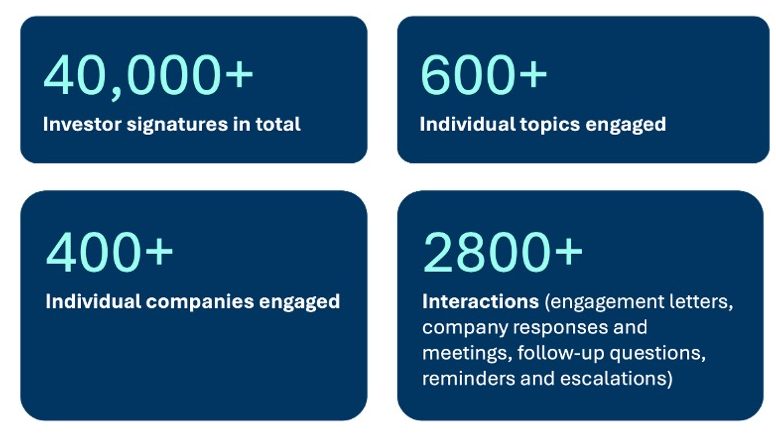
- From 2020 to 2025, Norm-Based Engagement facilitated engagement with more than 400 companies across over 600 sustainability topics, generating a unique dataset on investor priorities, company responsiveness, and engagement outcomes.
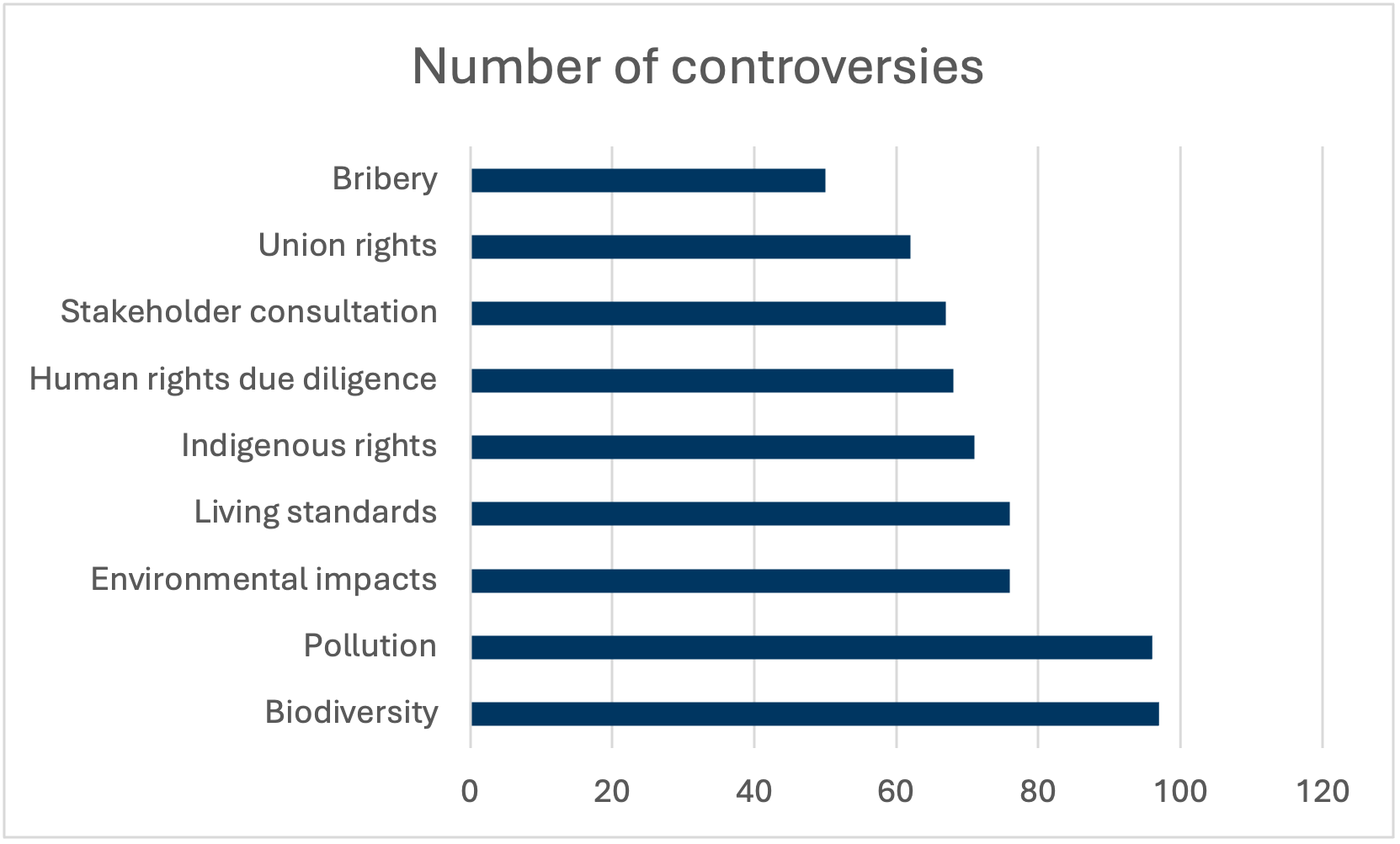
- During the six-year period, environmental and human rights-related controversies accounted for most of the sustainability topics engaged. Biodiversity was the most frequently engaged theme, followed by pollution, environmental impacts, living standards, and indigenous rights.
- Company responsiveness to investor outreach improved: the percentage of companies that responded to engagement letters rose from 66% in 2020 to 70% or above by 2024 and 2025. The quality of companies’ responses also either remained stable or improved. Further, companies that participated in NBE-facilitated investor meetings consistently demonstrated stronger participation than the wider engagement universe.
- More than half of engagements demonstrated progress on at least one action-oriented goal related to policy implementation, remediation, or the termination of problematic practices.
- Electric utilities companies accounted for the largest share of engaged controversies, followed by companies in the other metals/minerals, motor vehicles, and integrated oil industries.
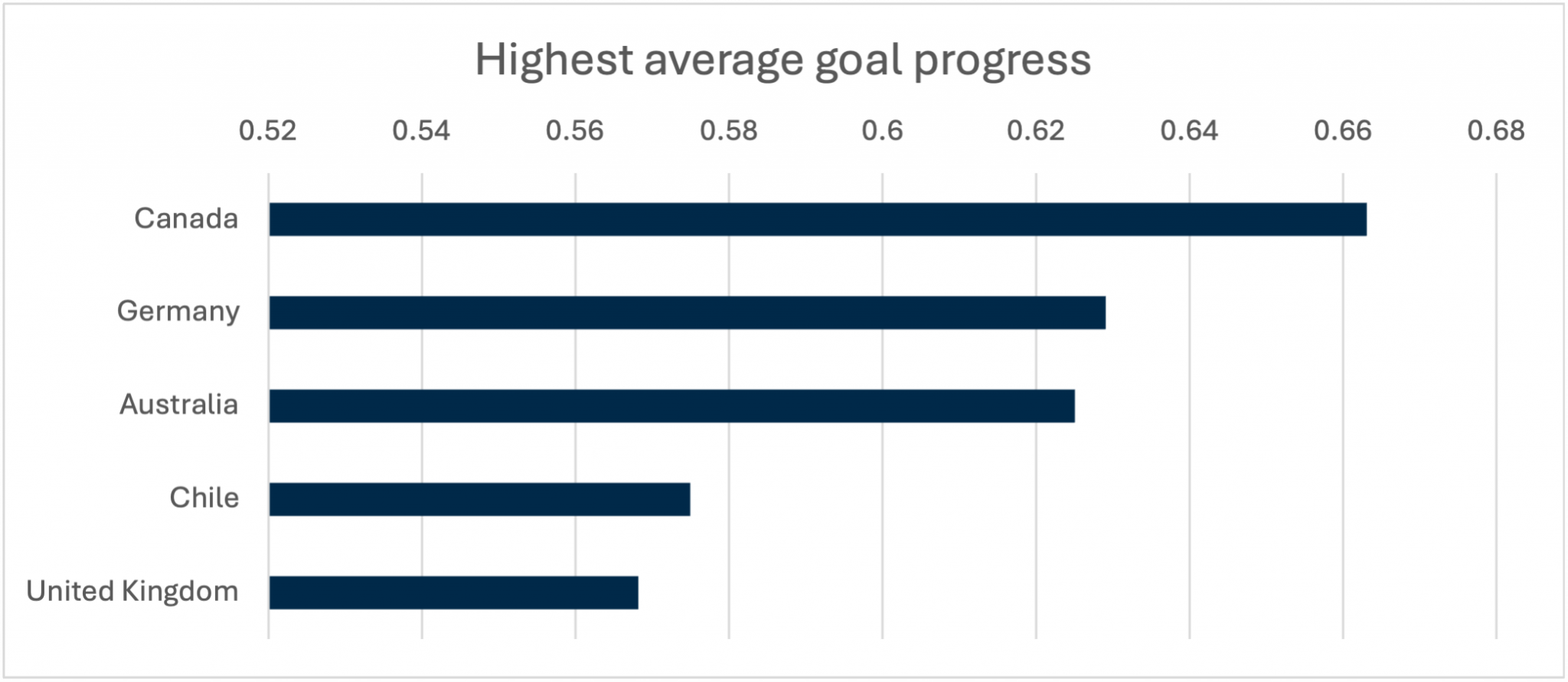
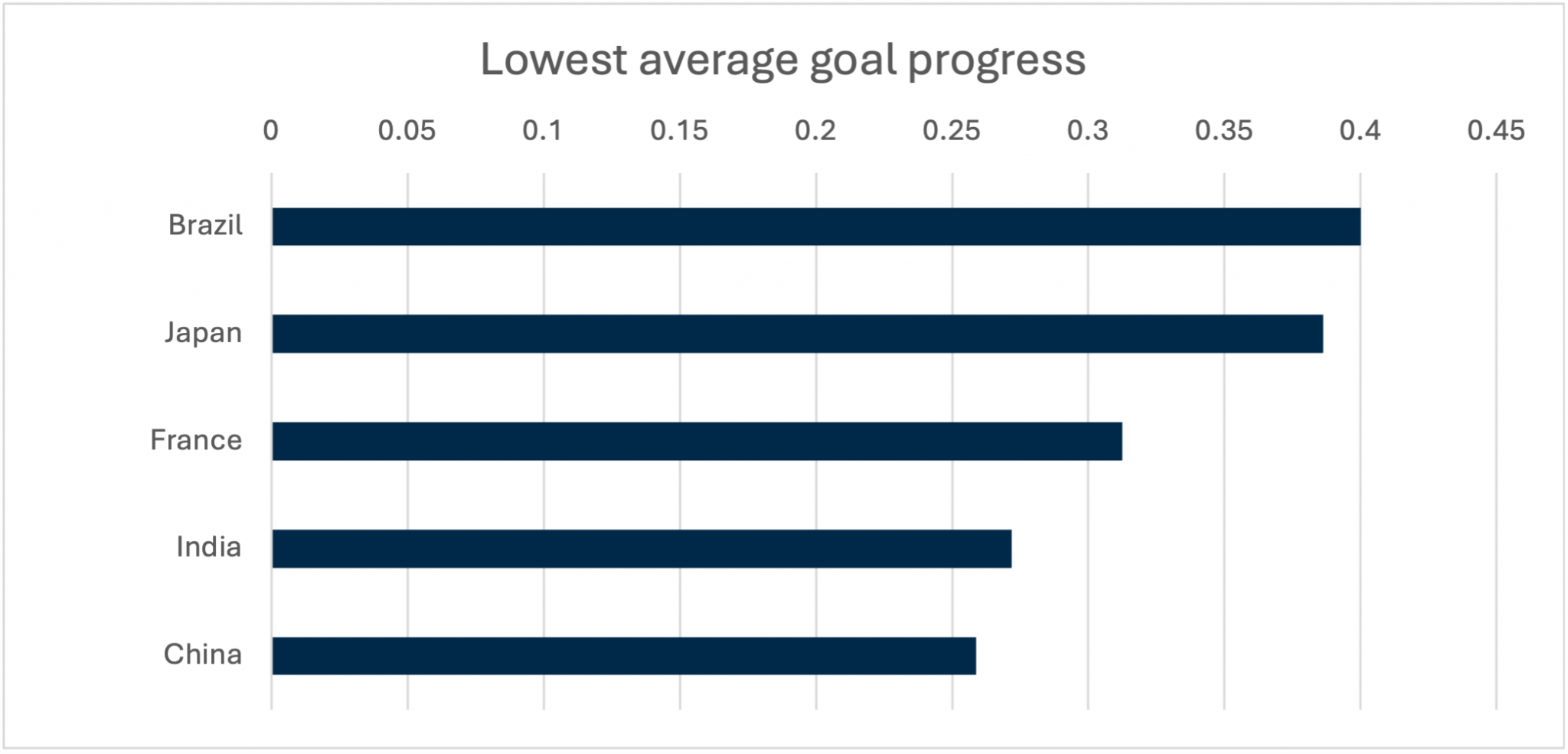
- Of the companies engaged with during 2020-2025, the United States was the most common company domicile, followed by China. Analysis of progress towards engagement goals shows that controversies linked to companies domiciled in Canada, Germany, and Australia achieved the highest average levels of progress toward goals, while companies domiciled in China and India recorded the lowest average goal progress.
ISS STOXX’s Norm-Based Engagement (NBE) enables collaborative investor engagement with companies linked to alleged or verified severe breaches of internationally recognized sustainability standards. Through coordinated engagement, participating investors seek greater transparency and accountability regarding how companies identify, manage, and mitigate the sustainability risks associated with their business activities and operations.
NBE focuses on companies identified through ISS STOXX’s Norm-Based Research as being linked to severe or systemic violations of international standards relating to four norm areas: human rights, labor rights, the environment, and anti-corruption. Each quarter, companies linked to significant controversies are selected for engagement, with goals spanning four categories: disclosure, policy implementation, remedial action, and the termination of problematic practices. Progress towards these goals is monitored throughout the engagement process to assess companies’ quality of participation and engagement outcomes.
Each engagement cycle begins with NBE preparing company-specific enquiry letters outlining the context and scope of the engagement. Clients can review each letter and decide whether to participate by signing it before it is sent to the company.
From 2020 to 2025, NBE facilitated engagement with more than 400 companies across over 600 sustainability topics, generating a unique dataset on investor priorities, company responsiveness, and engagement outcomes.
Drawing on six years of data from NBE, this article examines how sustainability risks evolved, where investors concentrated their efforts, and which factors were associated with stronger engagement outcomes. The analysis highlights trends in engagement themes, quality of participation, and goal progression, while also exploring variations across industries, geographies, and company domiciles.
Figure 1: NBE at a Glance, 2020-2025
The Shifting Sustainability Agenda and Trends
During 2020–2025, NBE launched quarterly engagement cycles involving 100 or more companies each year. Annual engagement coverage remained relatively stable, with around 135 companies engaged and covering around 200 sustainability topics on average.
Trends in Engagement Focus and Company Responsiveness
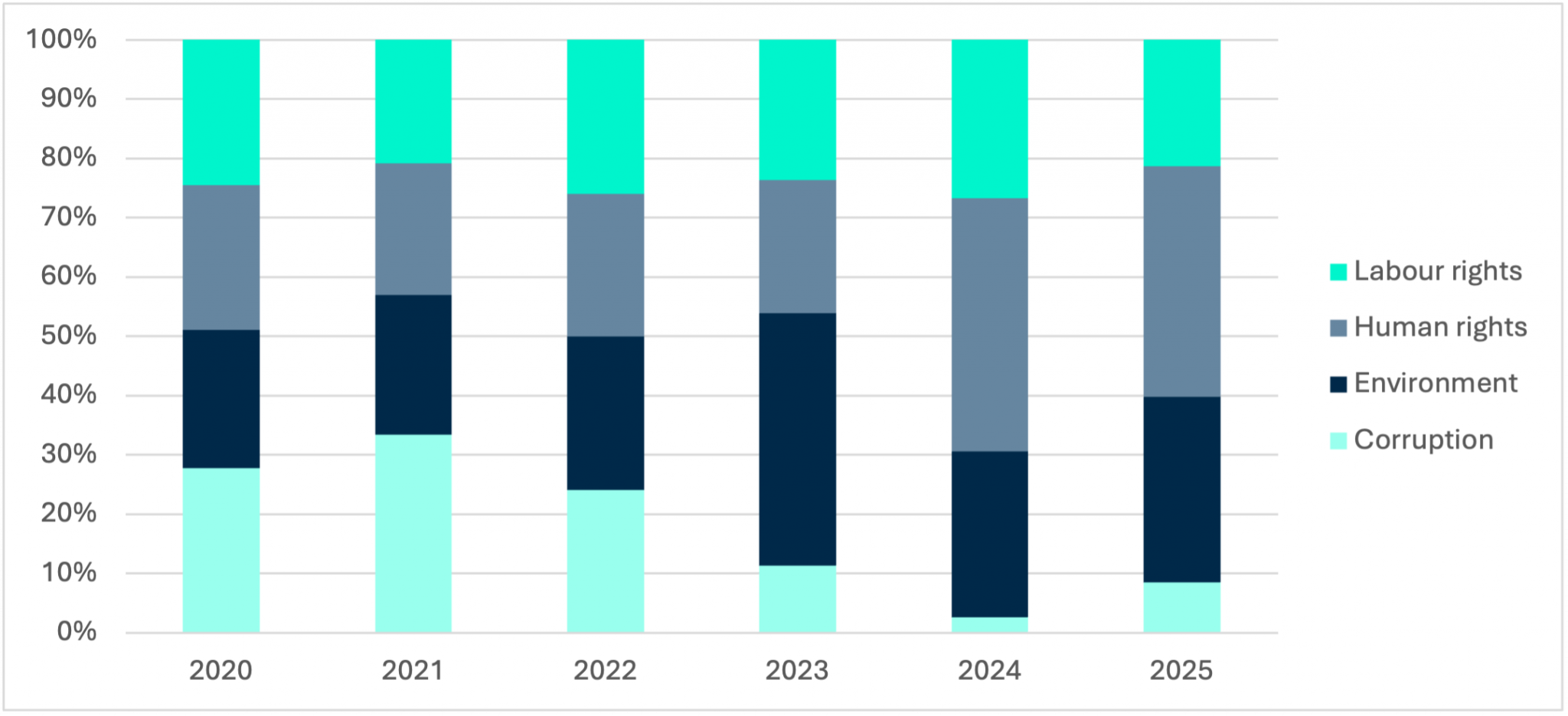
In the 2020-2025 period, environmental and human rights-related controversies accounted for most of the sustainability topics engaged (Figure 2).
Figure 2: Distribution of Controversy Engagement per Norm Area, 2020-2025
Biodiversity was the most frequently engaged theme overall, followed by pollution, environmental impacts, living standards, and indigenous rights (Figure 3).
Figure 3: Top Themes Engaged, 2020-2025
Over this period, there was a noticeable improvement in company responsiveness to engagement outreach. In 2020, 66% of all companies that were sent engagement letters throughout that year responded to investor outreach through written responses or meetings. By 2024 and 2025, response rates had risen to 70% or above.
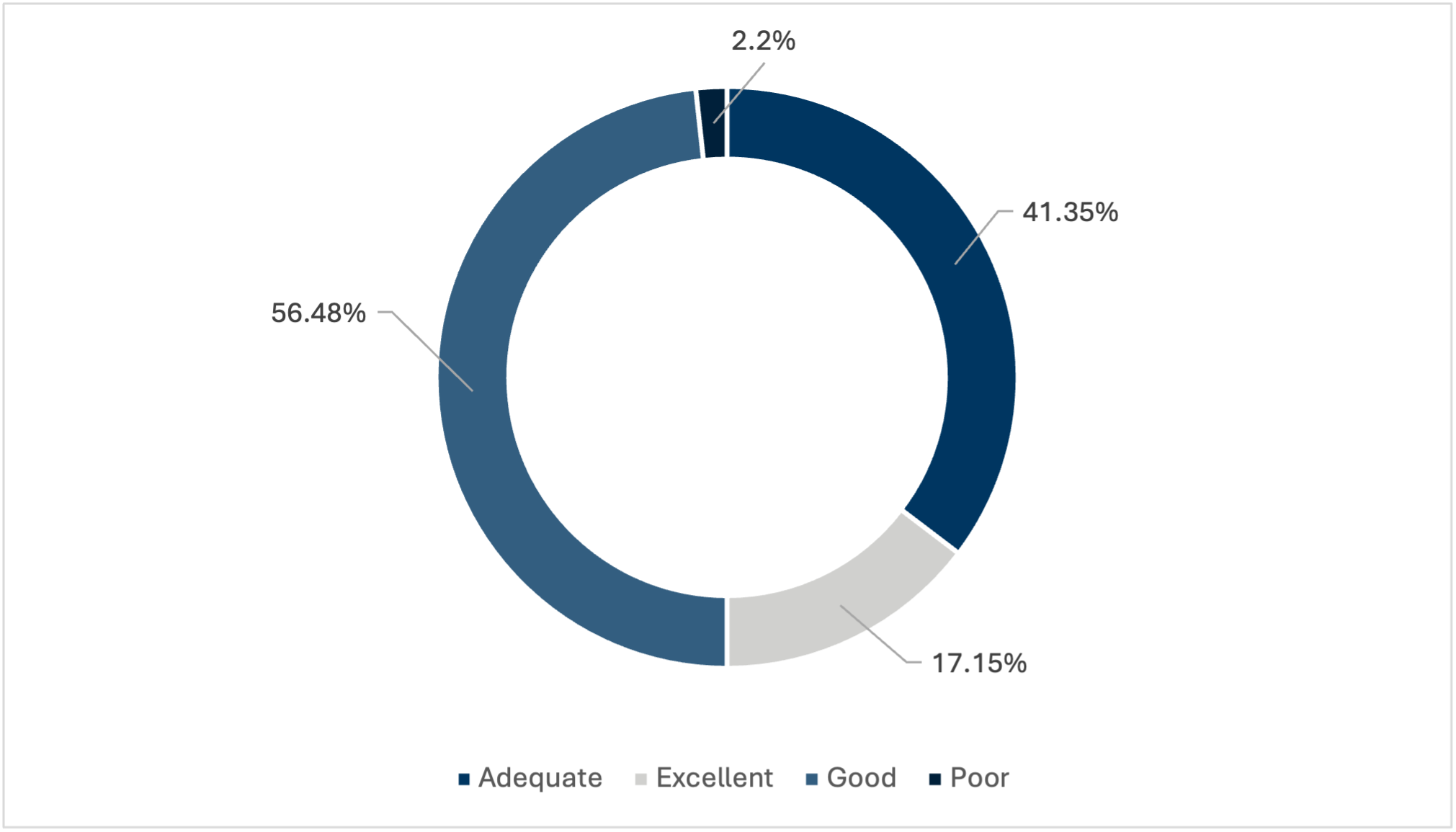
The quality of companies’ participation in the dialogue remained relatively stable from 2020 to 2025. Most companies demonstrated “Adequate” or “Good” participation, meaning they provided substantive responses to at least one or more engagement questions (Figure 4).
Figure 4: Quality of Participation per Controversy Engagement, 2020-2025
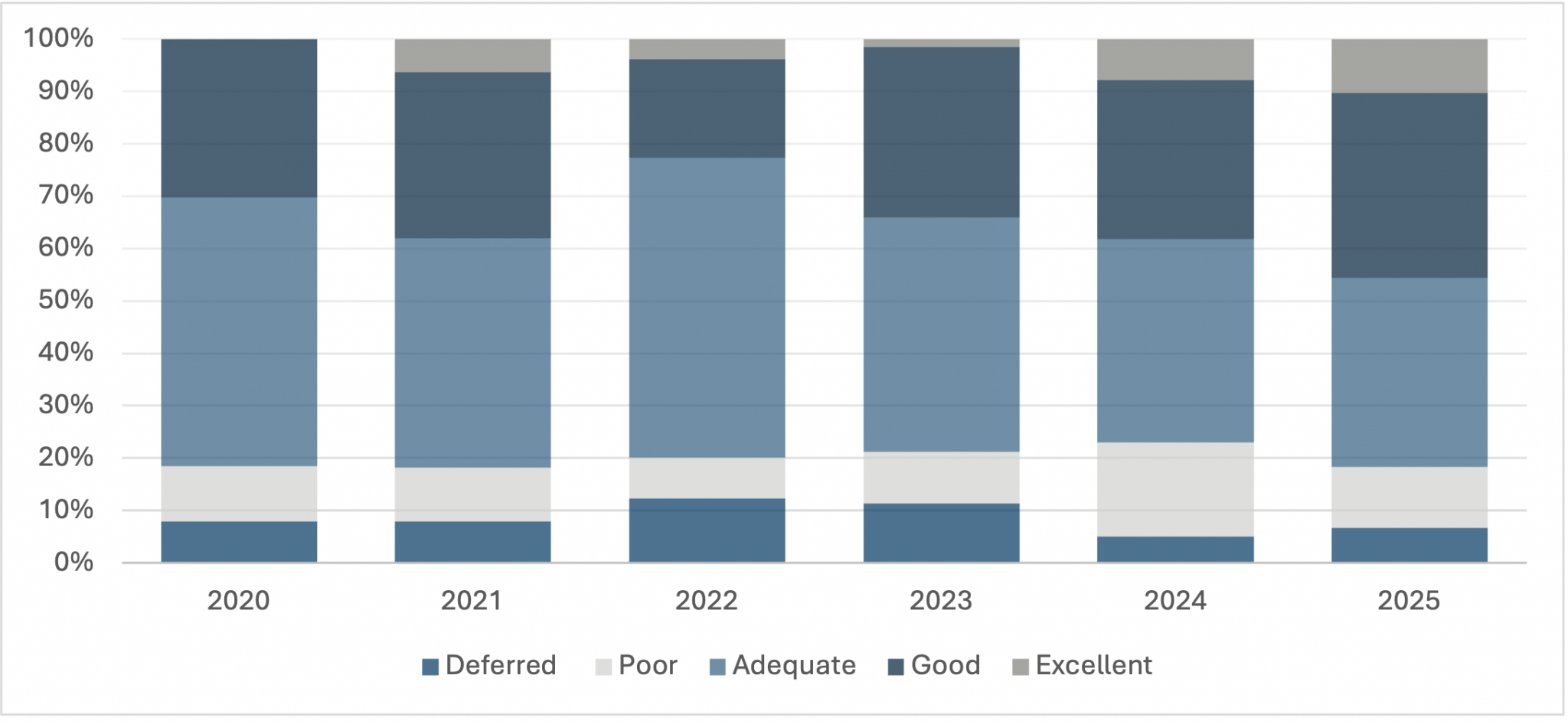
However, the share of engagements assessed as demonstrating “Excellent” participation increased over time, reaching its highest level in 2025, when 14 controversy engagements achieved this rating by providing substantive responses to all questions.
To highlight the added value of investor meetings in engagement dialogue, companies that participated in NBE-facilitated investor meetings consistently demonstrated stronger participation than the broader universe of companies responsive to engagement. More than half of companies participating in meetings achieved a “Good” quality of participation assessment, while the share assessed as “Excellent” was substantially higher than across engagements overall (Figure 5).
Figure 5: Distribution of Quality of Participation for Controversy Engagements Involving Meetings, 2020-2025
Measuring Outcomes: Progress towards Engagement Goals
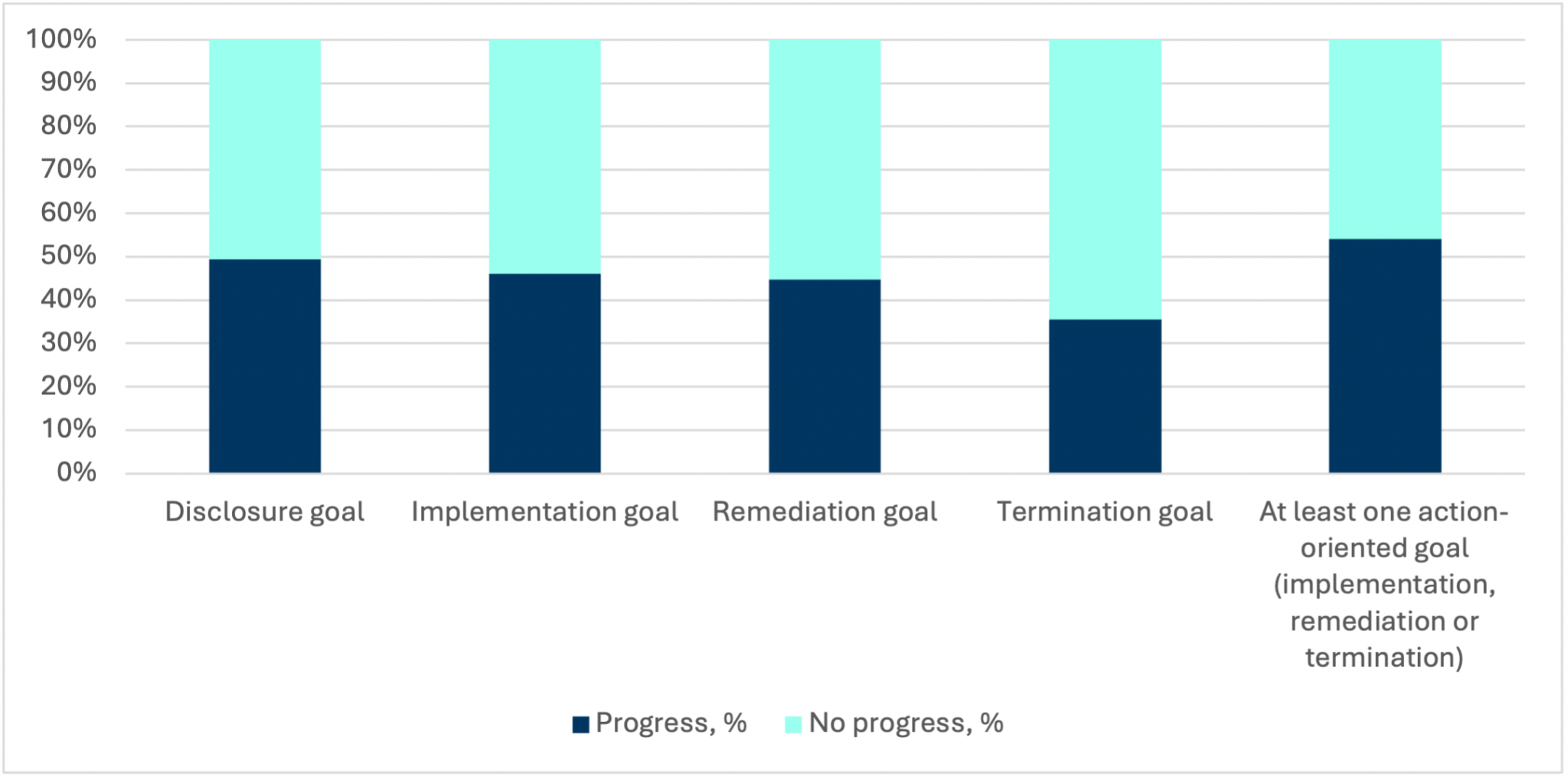
Looking at goal progression for all controversy engagements as of the end of their most recent engagement cycle, 54.1% of engagements demonstrated progress on at least one action-oriented goal—implementation of policies, remedial action, or termination of problematic practices. By comparison, 49.4% showed progress on the disclosure goal alone (Figure 6).
Figure 6: Share of Goals Progressed per Controversy, 2020-2025
Where Risks Emerged, Where Progress Was Made: Industries, Domiciles, and Controversy Locations
From 2020 to 2025, the largest share of engaged controversies was linked to companies in the electric utilities industry, followed by companies in the other metals/minerals, motor vehicles, and integrated oil industries (Figure 7).
Figure 7: Top Industries per Controversy Engagement, 2020-2025
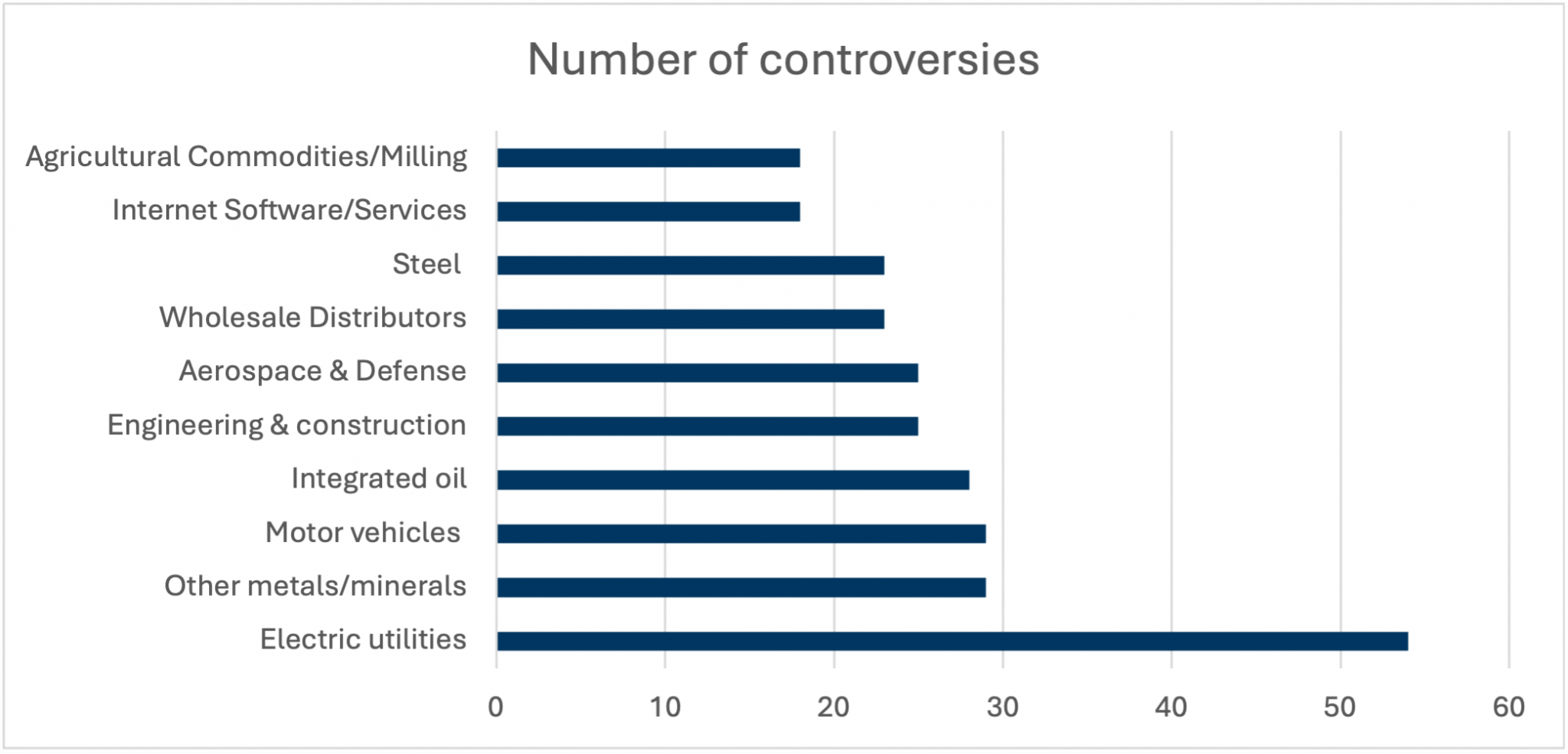
Although electric utilities remained the most represented industry as measured by the number of controversies, the number of electric utilities companies was only around two-thirds of the number of controversies engaged for these companies, suggesting that companies in this industry were often linked to multiple controversies. A similar pattern was observed across several of the other most represented industries.
Controversies linked to companies in the electric utilities industry spanned all regions across the globe as well as all four norm areas. The controversies were primarily related to project-specific environmental and human rights impacts, predominantly at dam operations in Brazil. Many of these cases were engaged multiple times over the period.
While dam-related controversies represented a significant share of engagements in the industry, controversies also involved other severe impacts. For example, in 2025, on behalf of 80 participating investors, ISS STOXX engaged with a U.S. electric utilities company on a controversy related to the right to life. The engagement focused on the company’s progress in providing compensation and remediation for impacts arising from wildfires, as well as its plans for ongoing support. By the end of the engagement, the company had achieved progress towards all engagement goals and was assessed as demonstrating “Excellent” quality of participation.
Like electric utilities, controversies linked to companies in the most represented industries, such as other metals and minerals, integrated oil, and steel, were identified across all regions, with a strong concentration in project-specific environmental and human rights topics.
One example is an Australian steel company that ISS STOXX engaged with repeatedly from 2020 to 2025, most recently on behalf of 68 participating investors. Engagement activities included multiple investor meetings and written responses and addressed several controversies, including human rights and environmental impacts associated with dam operations in Brazil.
Successive engagement outreach focused on the company’s progress in environmental remediation, livelihood restoration, compensation measures, and the resolution of outstanding legal cases and settlement agreements. By the conclusion of the 2025 engagement, the company had demonstrated progress towards all engagement goals and was assessed as demonstrating “Excellent” quality of participation.
In contrast, controversies involving companies in the motor vehicles industry were predominantly linked to environmental issues, particularly air pollution impacts related to the use of defeat devices designed to circumvent vehicle emission controls. These controversies were concentrated in Europe and North America, which were both the locations of the companies’ domiciles and the reported impacts.
Different company domiciles can be correlated with differences in regulatory environments, corporate governance practices, and levels of company responsiveness. The United States was by far the most common domicile of companies linked to controversies engaged from 2020 to 2025, followed by China (Figure 8).
Figure 8: Top Company Domiciles per Controversy Engagement, 2020-2025
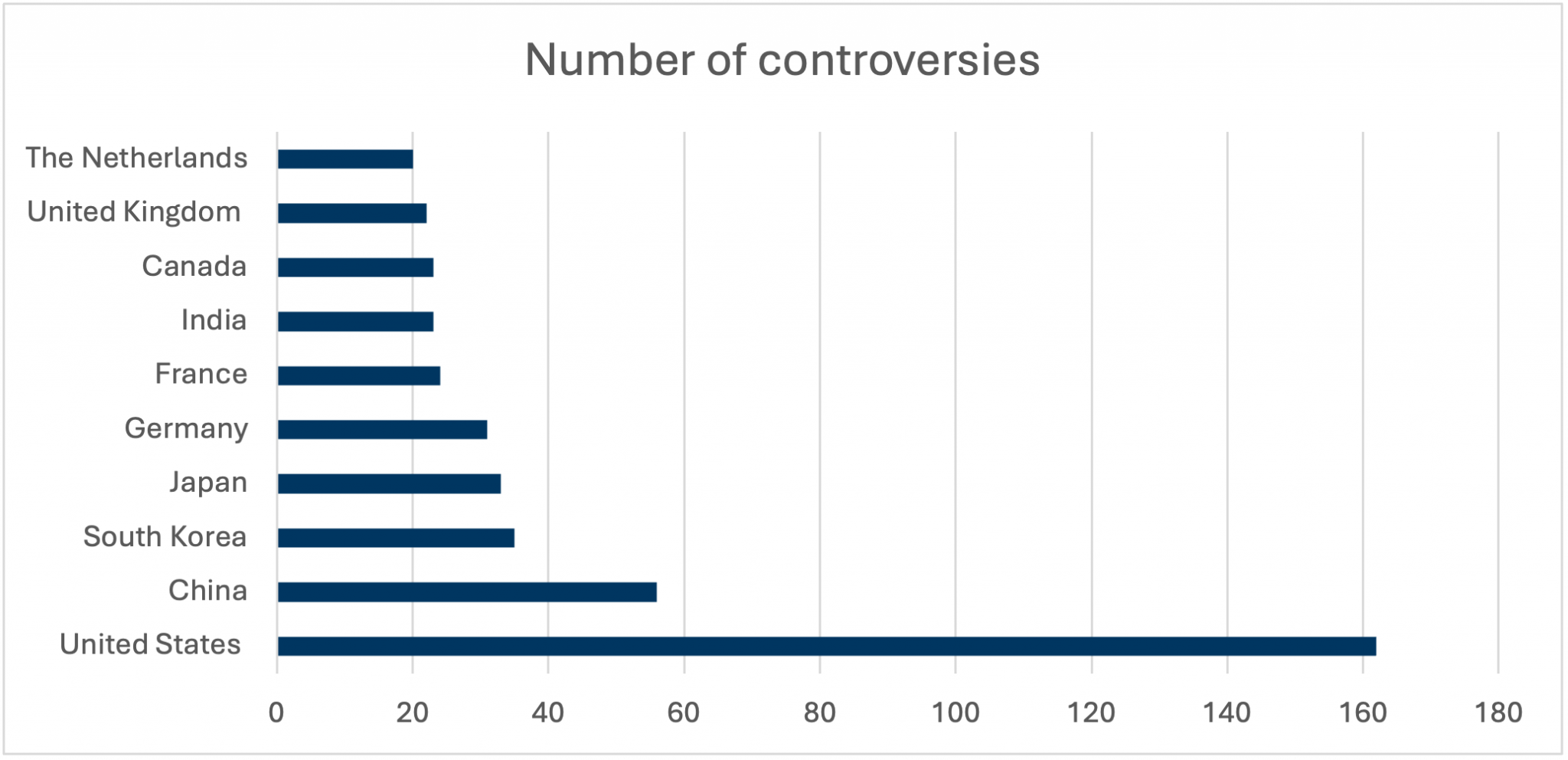
However, controversies involving companies domiciled in these two countries were highly diverse, spanning all geographic regions and covering each of the four norm areas.
An analysis of progress towards engagement goals by company domicile, as of the end of the company’s most recent engagement cycle, shows that controversies linked to companies headquartered in Canada, Germany, and Australia achieved some of the highest average levels of goal progress. In contrast, companies domiciled in China and India recorded the lowest average goal progress.
Figure 9: Average Goal Progress across Domiciles, 2020-2025
Source: Norm-Based Engagement
These differences are also reflected in the share of controversies demonstrating progress across all four engagement goals versus none. Around 70% of controversies involving companies domiciled in China and over 60% of controversies involving companies domiciled in India recorded no progress on any goal. By contrast, around half of the controversies linked to companies domiciled in Canada and Australia achieved progress across all four goals.
Such outcomes were not representative of all companies, however. For example, ISS STOXX engaged twice with a China-based precious metals company, most recently in 2025 on behalf of 75 participating investors. The 2025 engagement included multiple investor meetings and written responses and addressed a range of human rights and environmental controversies linked to the company’s mining operations across several locations worldwide. Discussions covered a broad set of environmental questions and goals, including waste and tailings management, environmental permits and policies, and site-specific measures to mitigate pollution impacts. Human rights-related engagement focused on grievance mechanisms, stakeholder consultation processes, and measures to prevent and remediate adverse impacts on affected communities.
By the end of the 2025 engagement, the company had demonstrated progress towards most engagement goals and achieved quality-of-participation assessments ranging from “Adequate” to “Excellent” across different controversies. The information disclosed through the engagement also contributed to an upgrade of the underlying Norm-Based Research assessment for one of the controversies.
Lessons from Six Years of Norm-Based Engagement
Over the 2020-2025 period, NBE engaged more than 400 companies across over 600 sustainability topics, providing participating investors with a platform to collectively address severe breaches of internationally recognized norms and standards. The data demonstrates not only the scale of collaborative engagement, but also how sustainability risks, company responsiveness, and engagement outcomes have evolved over time.
Several key findings emerge from the analysis. First, investor attention was predominantly concentrated on environmental and human rights-related controversies, with biodiversity, pollution, living standards, and indigenous rights among the most frequently engaged themes. Second, company responsiveness improved over time, with the share of engagements demonstrating “Excellent” quality of participation reaching its highest level in 2025. Most importantly, companies participating in NBE-facilitated investor meetings consistently demonstrated stronger participation than the wider engagement universe.
The analysis also found that more than half of engagements demonstrated progress on at least one action-oriented goal related to policy implementation, remediation, or the termination of problematic practices. While outcomes varied across industries, themes, and domiciles, examples throughout the analysis show that sustained engagement can support meaningful improvements in company disclosure, risk management, and remediation efforts.
These findings indicate the role collaborative engagement can play as a practical stewardship mechanism for addressing complex, and potentially long-term, sustainability challenges. By pooling investor influence, facilitating structured dialogue, and maintaining a focus on measurable goals, collaborative engagement can help drive greater corporate accountability while providing investors with valuable insights into how companies manage sustainability-related operational risks.
Your Feedback Matters
Let us know how this research resonated with you. Your input helps us develop content that resonates with investors across the globe.

Authored By
Sujay Pan, Engagement Coordinator, Sustainability Engagement,
ISS STOXX
Melike Sökmen, Engagement Manager, Sustainability Engagement,
ISS STOXX
See More